Attwater's Prairie Chicken Decline

A Scientific Investigation into Population Decline Over Time

Population Decline (1937–2015)

Figure 1. Estimated population of Attwater's prairie chicken in Texas from 1937 to 2015. (Peterson, 1996 and Morrow, 2020)

Background on Attwater's Prairie Chicken

Overview

The Attwater's prairie chicken (Tympanuchus cupido attwateri) is a critically endangered subspecies of the greater prairie chicken. Once widespread along the Texas Gulf Coast, it now survives only in isolated populations on protected lands such as the Attwater Prairie Chicken National Wildlife Refuge and private properties in Goliad County.

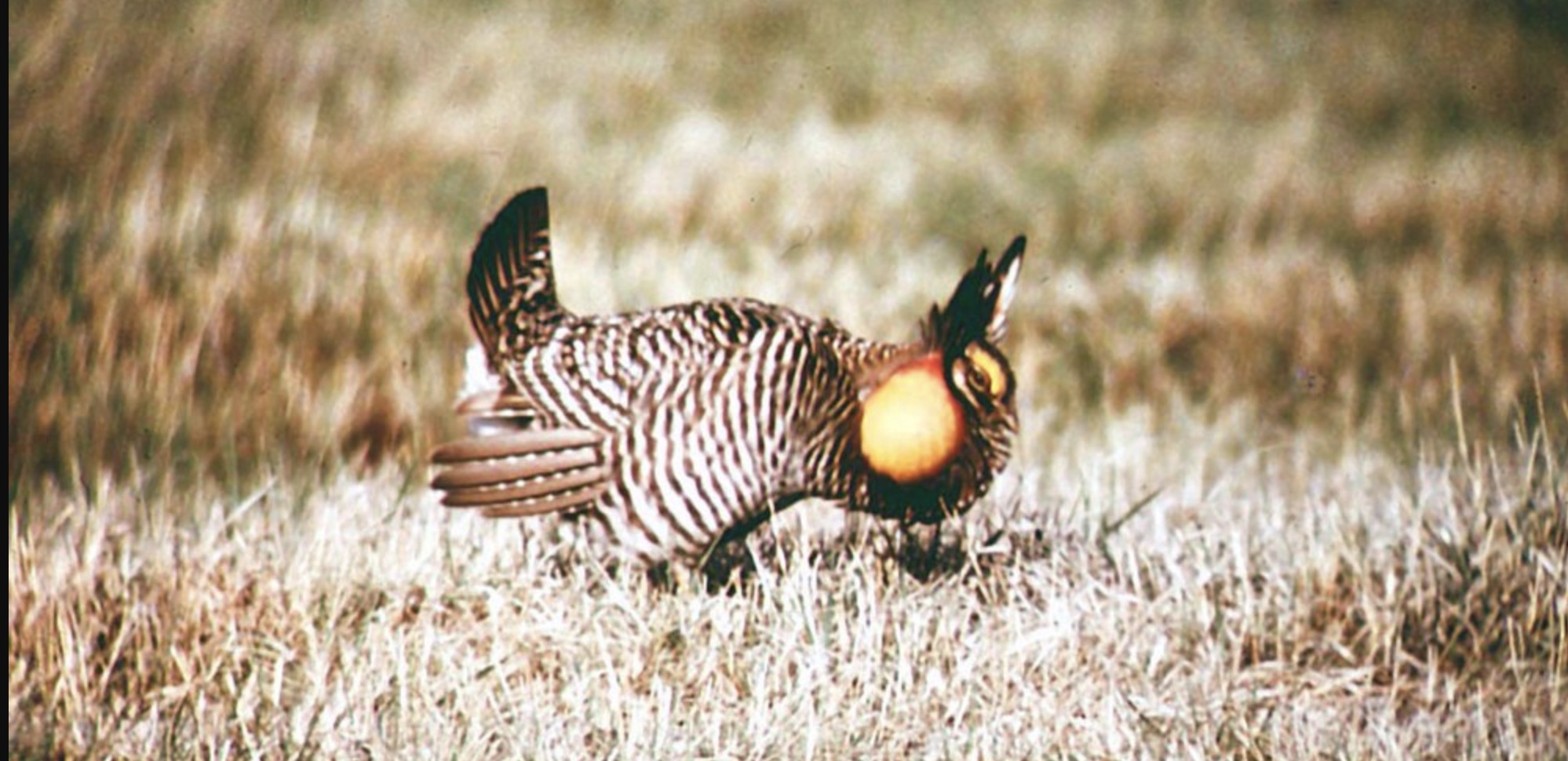
Attwater's Prairie Chicken displaying

Figure 2. Male Attwater's prairie chicken performing mating display showing distinctive orange air sacs and pinnae feathers.

Physical Description

Adults are 17–18 inches long with barred brown and white feathers. Males are known for their booming mating displays, featuring elongated neck feathers and bright orange air sacs. They typically live between 2 and 5 years.

Habitat

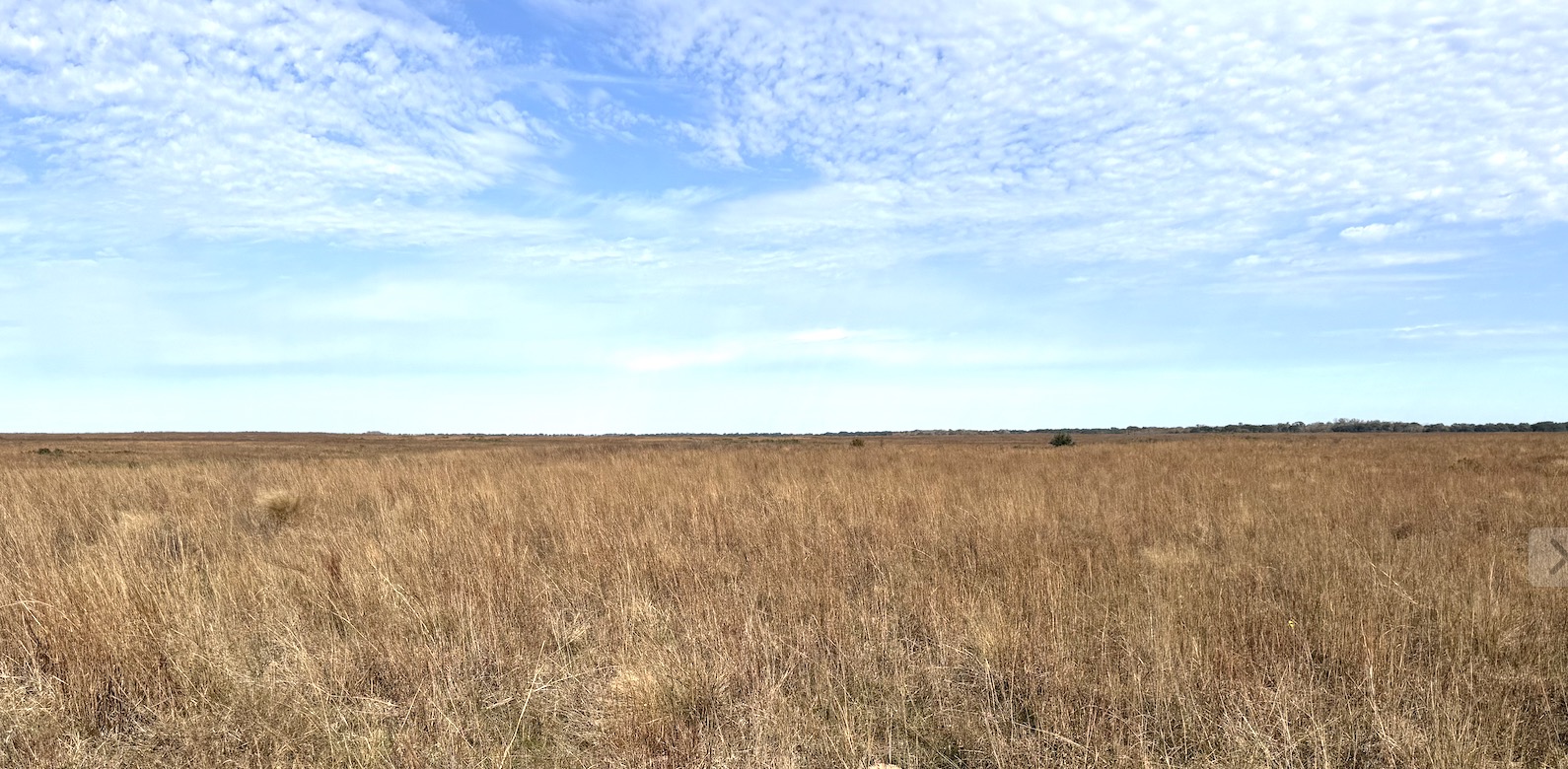
This bird depends on native tallgrass coastal prairies with grasses like little bluestem and Indiangrass. It favors open, grassy areas with minimal woody vegetation and dense cover for protection and nesting.

Texas coastal prairie habitat

Figure 3. Native coastal prairie habitat showing the tallgrass ecosystem essential for Attwater's prairie chicken survival. Photo by Paul Andersen.

Diet

Adults feed on seeds, buds, and prairie vegetation. Chicks rely on insects such as grasshoppers and beetles before transitioning to plants as they mature.

Life Cycle

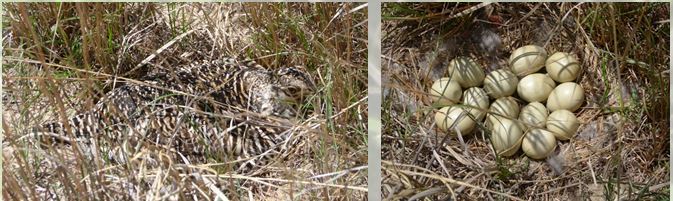
Mating occurs from January to May, with peak activity in March. Females lay 10–14 eggs in grass-covered ground nests. Eggs hatch in about 26 days, and chicks remain with the mother for six weeks before becoming independent.

Greater Prairie-Chicken hen incubating in the wild and her 14-egg clutch

Figure 4. Greater Prairie-Chicken hen incubating in the wild (left) and her 14-egg clutch (right). (www.suttoncenter.org)

Population Trends

Historically numbering in the tens of thousands, the Attwater's prairie chicken population declined sharply over the 20th century. By the mid-1990s, fewer than 50 individuals remained in the wild.

Evidence 1: Lehman - 1941

Description of Research

To document the life history and management requirements of the Attwater's prairie chicken across its former coastal-prairie range. Conducted extensive field observations of courtship displays, nesting behaviors, brood development, seasonal movements, diet (via stomach-content analysis), and habitat characteristics; compiled and mapped historical versus contemporary distributions; and correlated brood-outcome categories with May precipitation records to assess rainfall effects on nesting success.

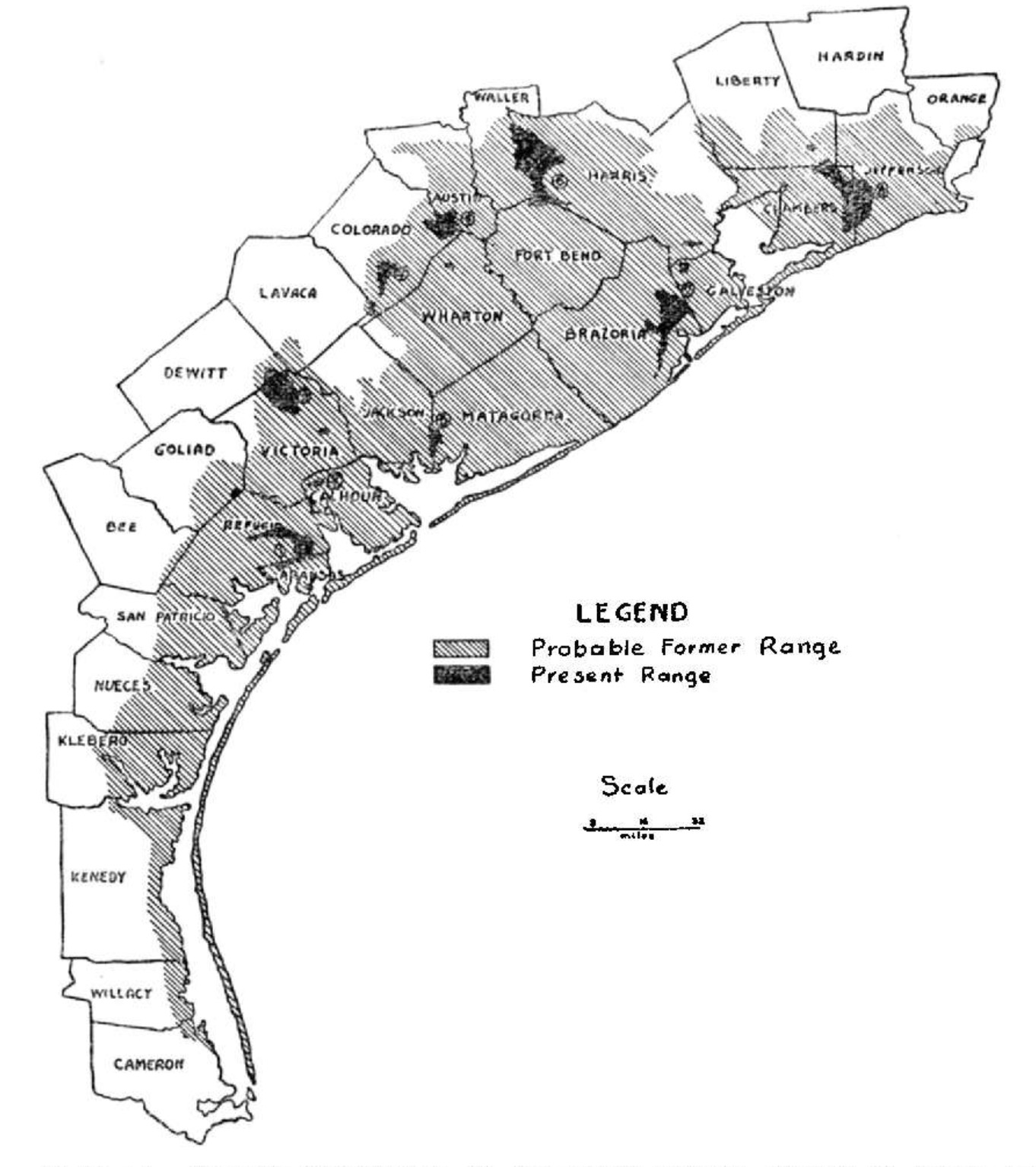
Historical Range Distribution

Historical range map of Attwater's Prairie Chicken in Texas

Figure 5. Present distribution of Attwater's prairie chicken in Texas and probable former range in the coastal section.

Brood-outcome Categories vs May Precipitation

Time Period / Season Brood Outcome Category May Precipitation (Relative to Average)
March–June (peak May) Good broods ≈ 1.5 in below average
March–June (peak May) Fair broods Near average
March–June (peak May) Poor broods ≈ 2 × average

Table 1. Correlation between May precipitation levels and brood outcome success categories showing the negative impact of excessive rainfall on reproductive success.

Evidence 2: Peterson & Silvy - 1996

Description of Research

The researchers chose to compare reproductive metrics in the Attwater's and Greater Prairie Chicken. The Greater Prairie Chicken was chosen as a comparison because they are the same species (closely related subspecies) with nearly identical life histories and breeding behaviors. Since both subspecies have similar nesting behaviors and breeding rates, any differences in reproductive success would indicate specific limiting factors affecting Attwater's that aren't impacting the more stable Greater Prairie Chicken populations.

Range map of four remaining prairie chicken species in the United States

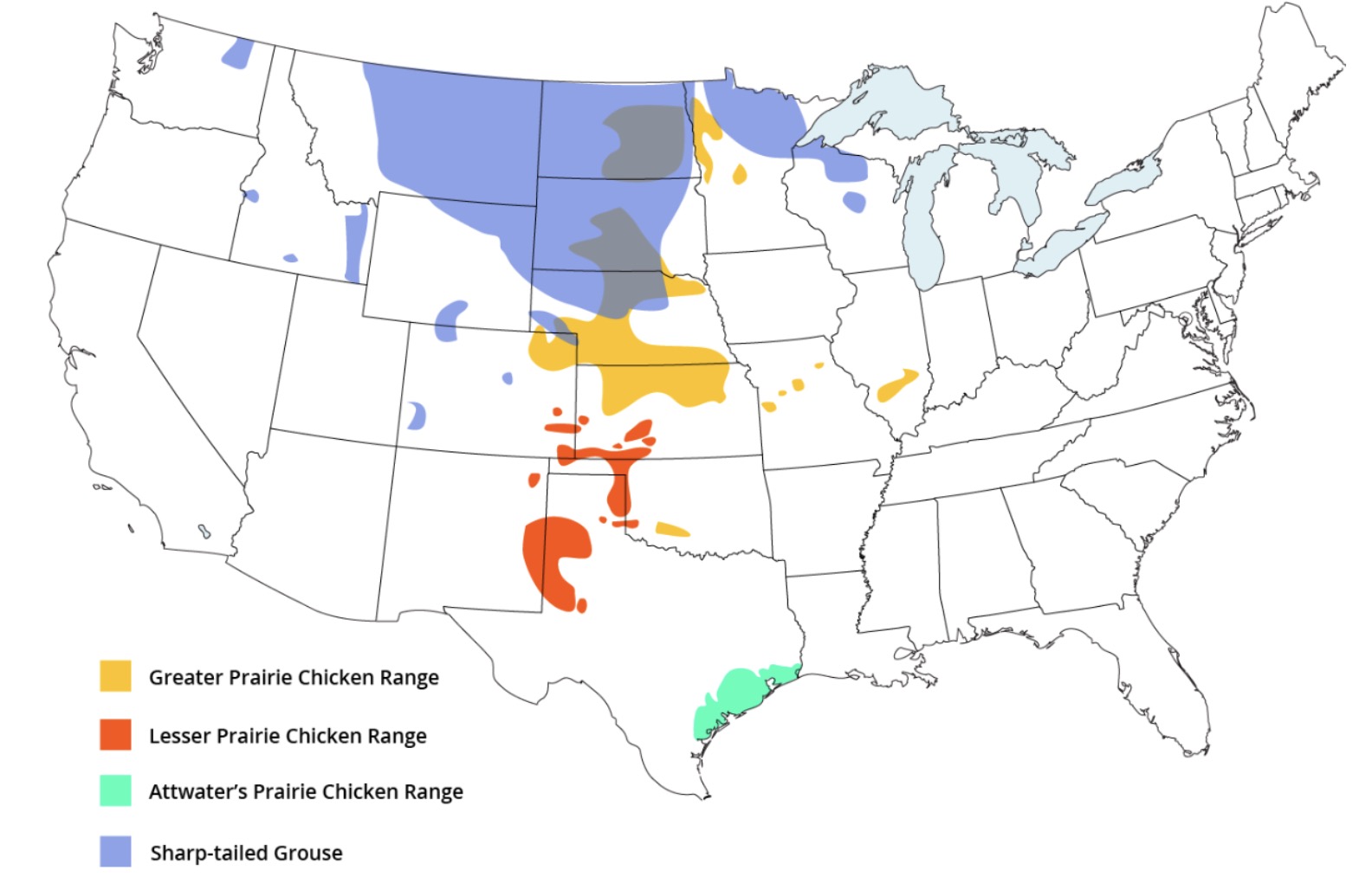
Figure 6. Range of four remaining species of prairie chickens in the United States, Greater Prairie Chicken, the Lesser Prairie Chicken, Attwater's Prairie Chicken, and the Sharp-tailed Grouse. The Heath Hen went extinct in 1932. (prairiechickensforever.com)

Nesting Success and Egg Hatchability (%)

Figure 7. Comparison of nesting success and egg hatchability percentages between Greater Prairie Chicken and Attwater's Prairie Chicken populations.

Chicks per Brood (Number)

Figure 8. Average number of chicks per brood comparing Greater Prairie Chicken and Attwater's Prairie Chicken reproductive output.

Annual Recruitment (Ratio)

Annual recruitment measures how many new individuals (juveniles) are successfully added to the breeding population each year relative to the existing adult population. A recruitment ratio of 1.0 or higher is generally needed for population stability, as it indicates the population is replacing adults that die each year. Ratios below 1.0 suggest population decline.

Figure 9. Annual recruitment ratios showing the significant difference in population recruitment between Greater Prairie Chicken and Attwater's Prairie Chicken populations.

Comparison of nesting success between Greater and Attwater's Prairie Chickens

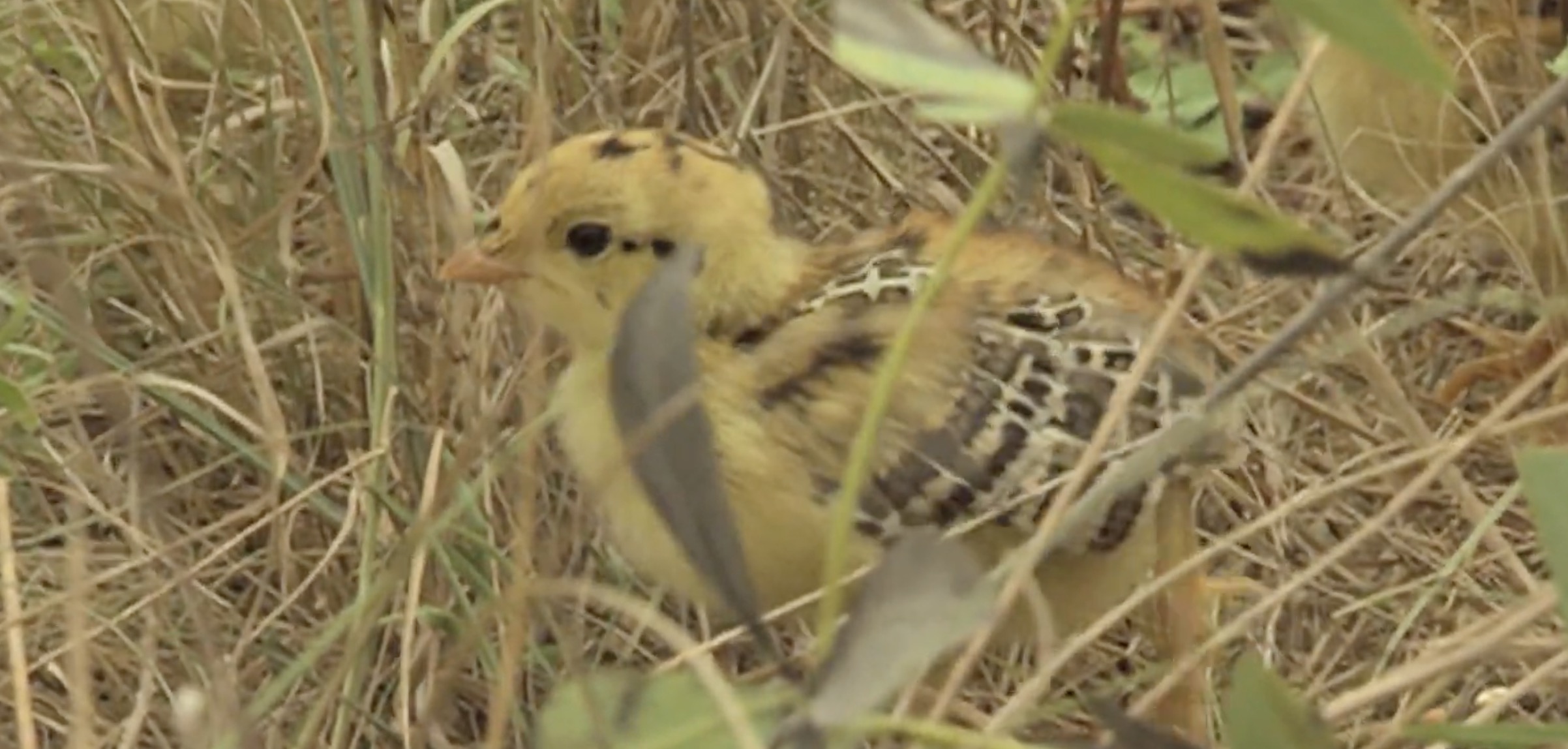
Figure 10. Recently hatched Attwater's prairie chicken chick in tall grass habitat.

Evidence 3: Morrow, Adamcik, Friday & McKinney - 1996

Description of Research

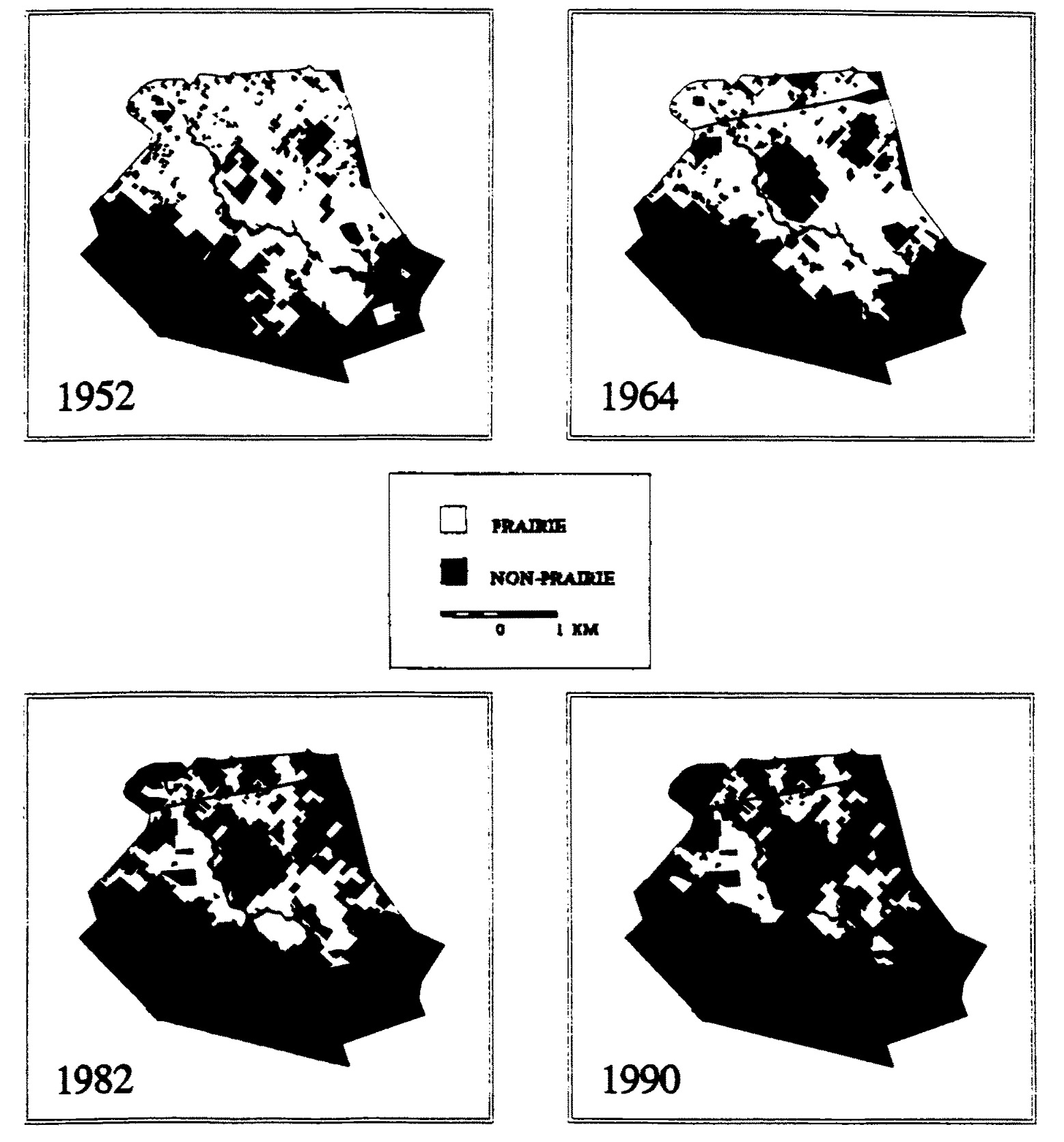
To examine declines and increases in prairie-chicken numbers from 1973–1993 in relation to refuge management, and surrounding populations. Compiled annual counts of booming males as an index of population size. They also quantified grassland habitat availability within a 56,000-ha region of Austin and Colorado counties, Texas, by analyzing land-cover data for 1952, 1964, 1982, and 1990.

Refuge management and habitat conservation efforts

Figure 11. Population trends of booming males on refuge versus off-refuge areas from 1973-1992, demonstrating the importance of protected habitat management.

Figure 12. Refuge management activities and habitat conservation efforts at Attwater Prairie Chicken National Wildlife Refuge.

Grassland Habitat Loss Over Time

Grassland habitat availability in a 56,000-ha area of Austin and Colorado counties, Texas, from 1952-1990.

52%
1952
43%
1964
24%
1982
17%
1990

Figure 13. Dramatic decline in grassland habitat availability showing 67% habitat loss from 1952 to 1990 in a 56,000-hectare study area.

Evidence 4: Morrow, Chester, Lehnen, Drees & Toepfer - 2015

Description of Research

From 2009–2013, radio-tagged 63 broods and tracked them daily during the first two weeks post-hatch; collected daily sweep-net samples of invertebrates at brood sites; experimentally suppressed fire ants at treatment sites using aerially applied Extinguish Plus™ bait; and compared invertebrate counts, biomass, and brood survival probabilities between treated and reference fields across five study locations.

Brood Survival vs. Invertebrate Abundance

Figure 14. Relationship between median invertebrate count per 25 sweeps and probability of brood survival at 2 weeks. Higher invertebrate availability correlates with increased chick survival rates.

Fire ant colonies in the Attwater Prairie Chicken Refuge

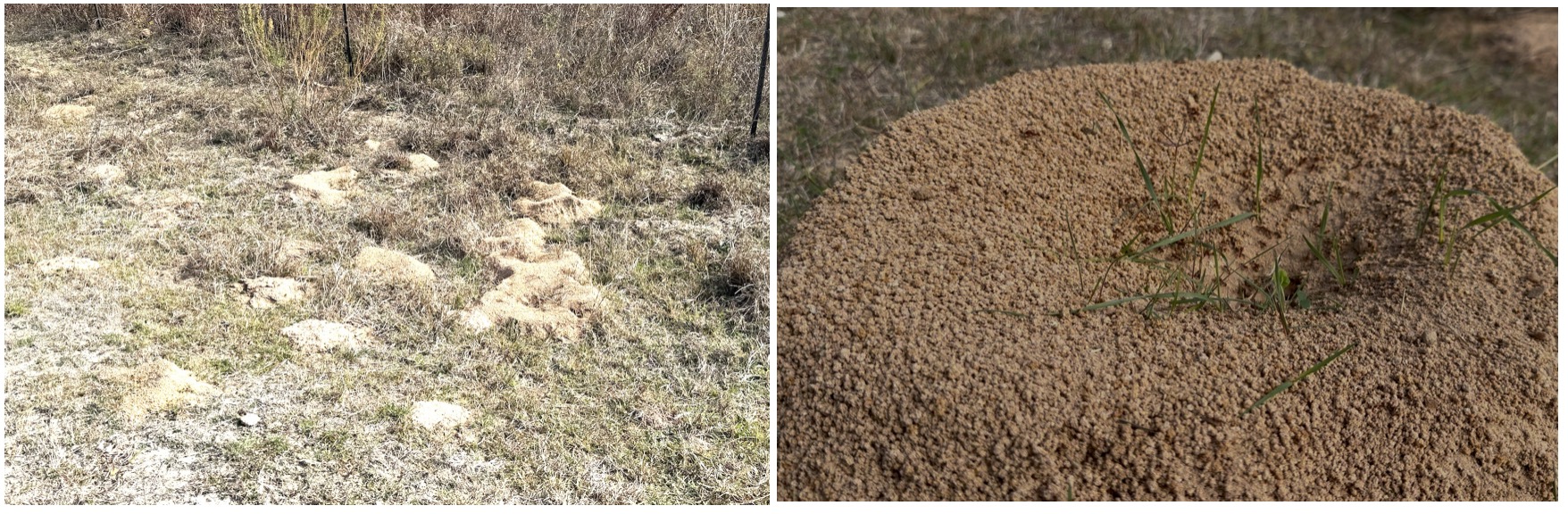
Figure 15. Fire ant colonies in the Attwater Prairie Chicken National Wildlife Refuge. Photo by Paul Andersen.

Brood Survival vs RIFA Treatment Coverage

Figure 16. Effect of red imported fire ant (RIFA) treatment coverage on brood survival probability, showing increased survival with greater treatment area coverage.

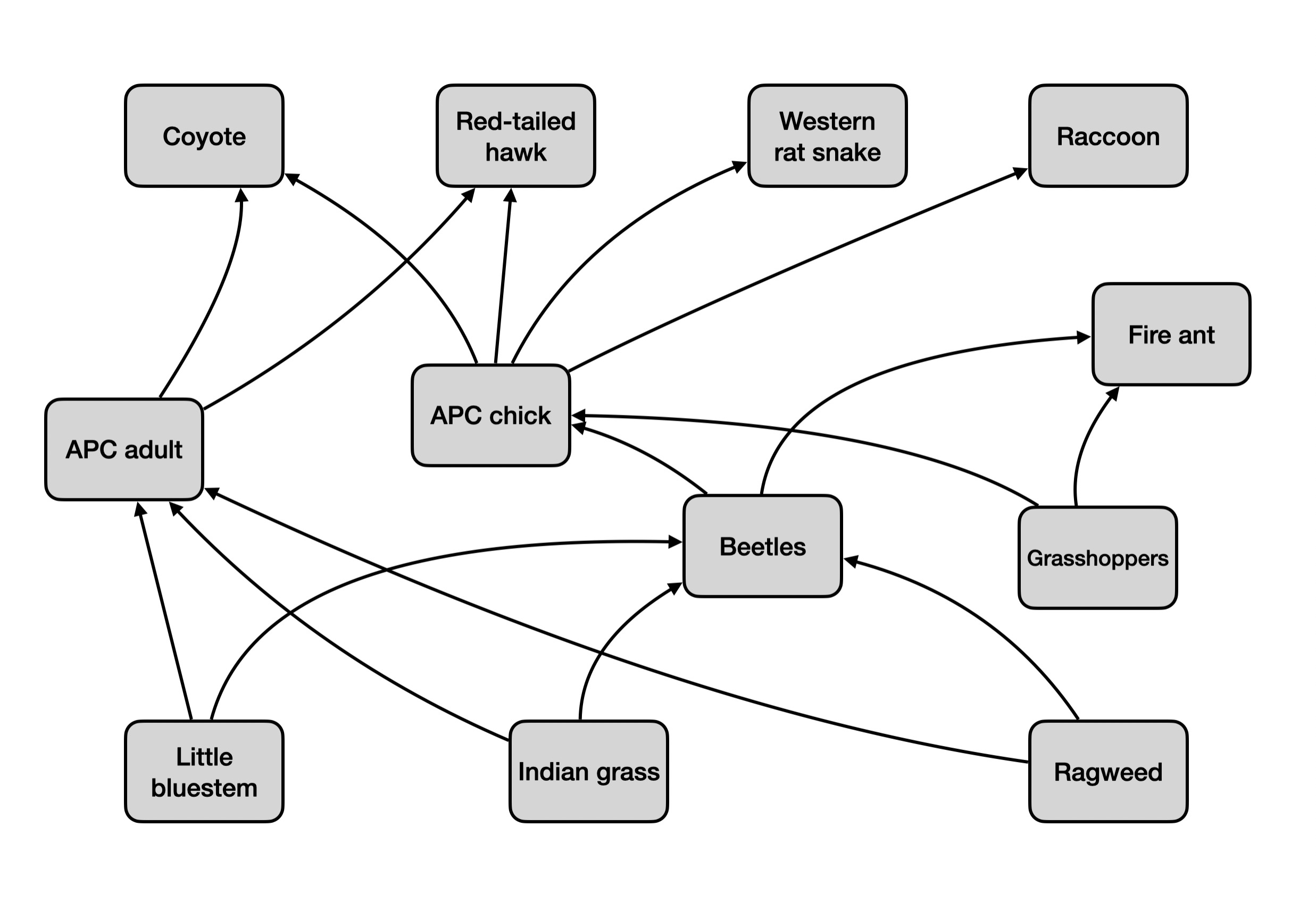
Prairie Ecosystem Food Web

Attwater's Prairie Chicken ecosystem food web showing predator-prey relationships

Figure 17. Attwater's Prairie Chicken ecosystem food web diagram illustrating the complex predator-prey relationships and energy flow within the coastal prairie habitat.

Evidence 5: Morrow & Toepfer - 2020

Description of Research

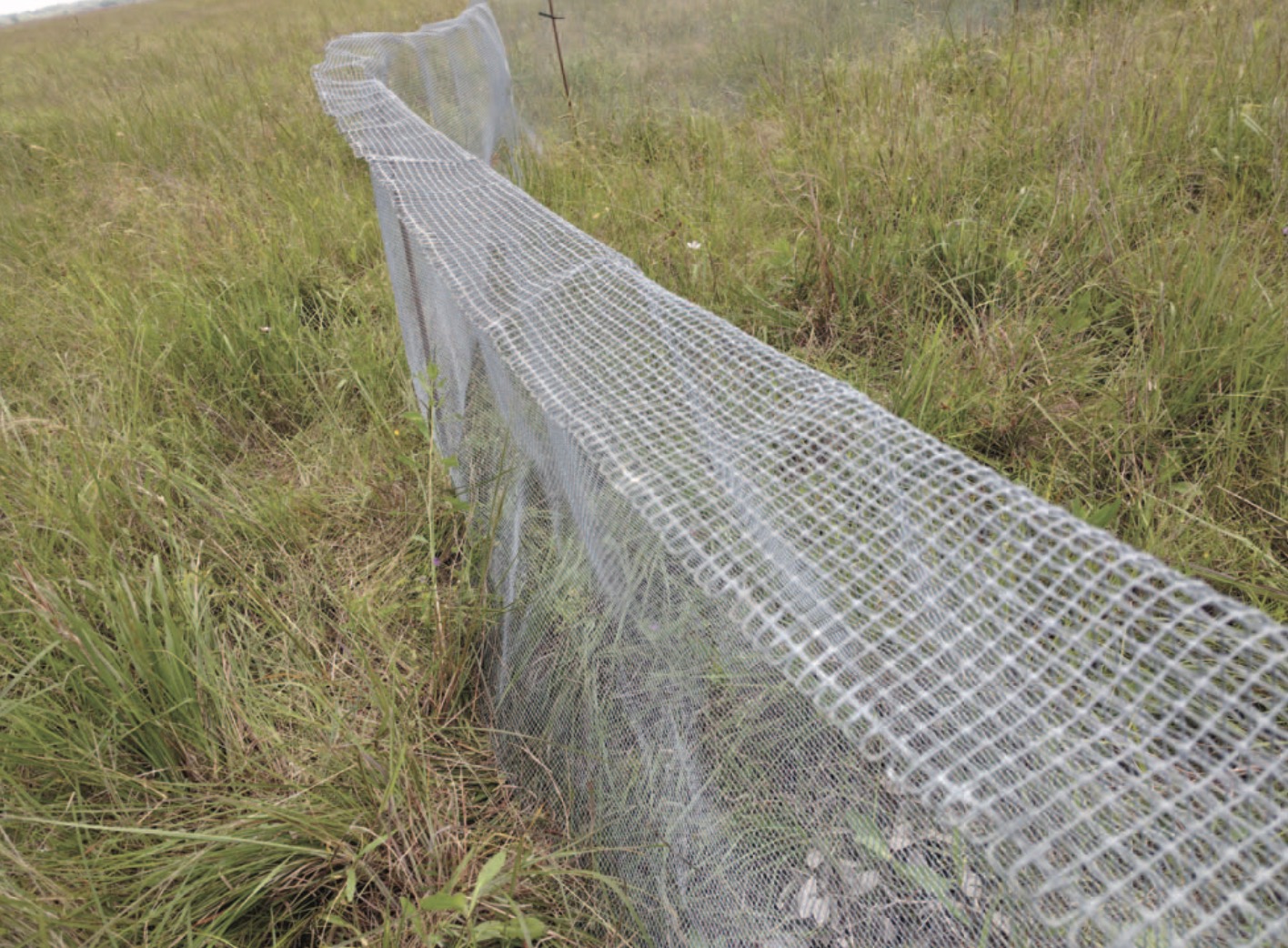
Compared outcomes of nests surrounded by hardware-cloth fences to unfenced controls from 1997–2019 at a refuge; constructed fences of two sizes (15.2 m sides in 2000–2012; 7.6 m sides in 2012–2019); monitored nest fate, hatchability, and abandonment through regular nest checks; and statistically compared daily survival rates between fenced and unfenced nests.

Hardware-cloth predator deterrent fence protecting Attwater's Prairie Chicken nest

Figure 17. Hardware-cloth predator deterrent fence surrounding an Attwater's prairie chicken nest site. Photo courtesy of Morrow, 2020.

Daily Nest Survival: Fenced vs. Unfenced

Figure 18. Daily nest survival rates comparing fenced versus unfenced nests over the 25-day incubation period, demonstrating the effectiveness of predator deterrent fencing.

Nest Fate Summary (1997-2019)

Unfenced Nests (1997-2011)

12.0% Hatched
  • 48.0% Snake predation
  • 28.0% Mammalian predation
  • 4.0% Unknown predation
  • 4.0% Abandoned
  • 4.0% Hen killed

Fenced Nests (2000-2019)

82.5% Hatched
  • 5.0% Snake predation
  • 2.9% Mammalian predation
  • 5.8% Abandoned
  • Other causes: <4%

Table 2. Comprehensive nest fate summary comparing outcomes between unfenced nests (1997-2011) and fenced nests (2000-2019), showing dramatic improvement in hatching success with predator protection.